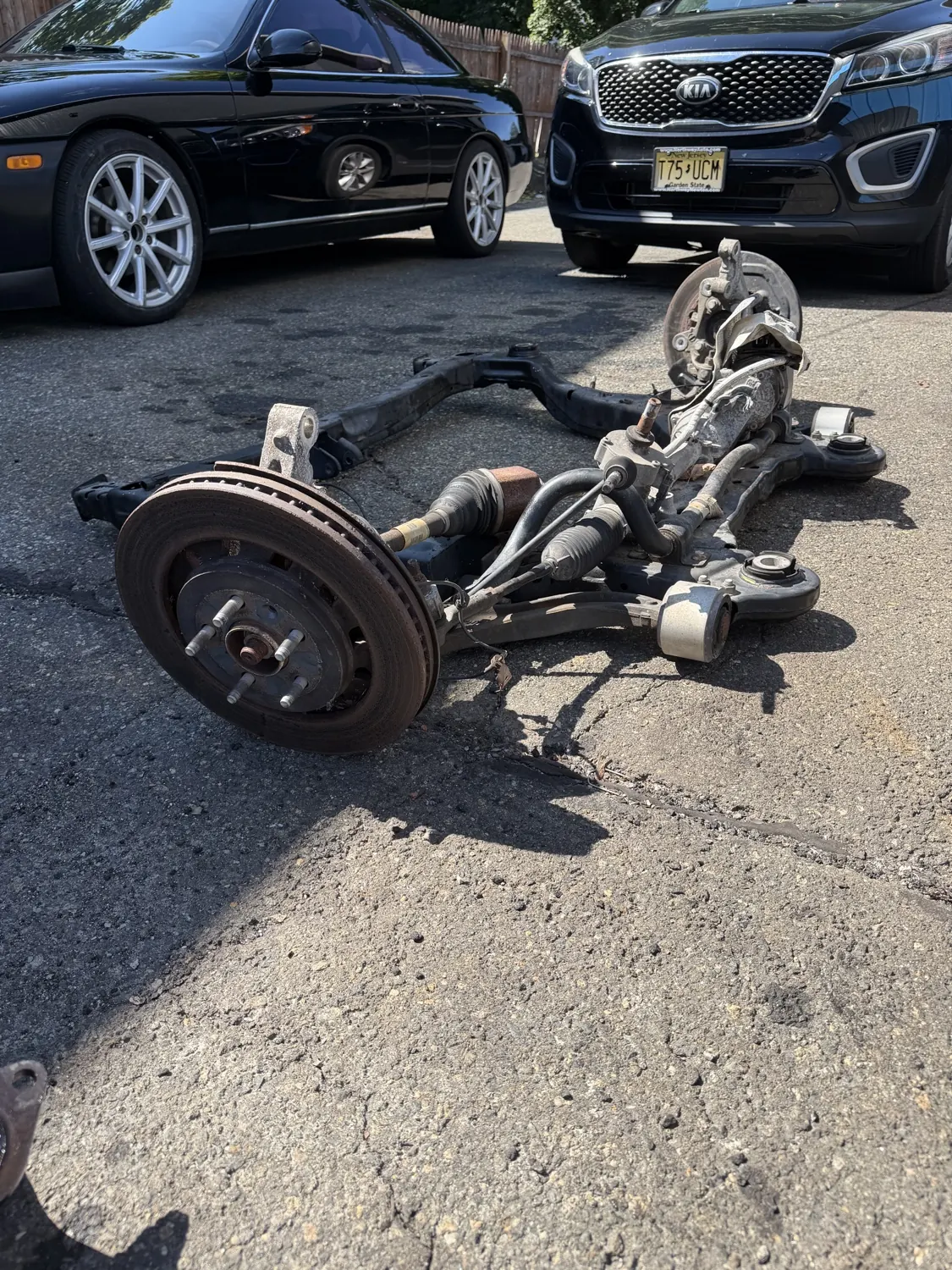
Differential
Lets the wheels on an axle turn at different speeds through a corner while both still drive. Rear-wheel and four-wheel drive vehicles have at least one; all-wheel drive often has two plus a center unit.
Professional, dependable service with a lifetime warranty on most repairs, at four open New Jersey shops, with Lodi opening soon. Book your appointment with KRP Automotive today.
The part of the car nobody services
Everything between the transmission and the wheels is the drivetrain, and it is the system drivers are least likely to have serviced. Engine oil gets a sticker. Gear oil gets forgotten until something starts making a noise.
That is a shame, because these components give a long warning before they fail. A differential howls for months before it needs a rebuild. A CV boot tears long before the joint clicks. An axle seal weeps before the bearing growls.
Caught at the warning stage, nearly all of it is small work. Caught after, it is some of the more expensive repair on a vehicle, and on four-wheel drive trucks it is expensive twice.
We service and repair differentials, transfer cases, driveshafts, universal joints, CV axles, axle seals and bearings on cars, trucks and four-wheel drive vehicles at all four open shops.
What is in a drivetrain
Lets the wheels on an axle turn at different speeds through a corner while both still drive. Rear-wheel and four-wheel drive vehicles have at least one; all-wheel drive often has two plus a center unit.
Splits power between front and rear on four-wheel and all-wheel drive. Runs its own fluid on its own schedule, and it is the part most often forgotten entirely.
Carries power from the transmission to the axle. Universal joints and the center support bearing are the wear items, and both announce themselves.
The jointed shafts that drive the front wheels on most cars. A torn boot lets grease out and grit in, and the clicking on turns follows a few thousand miles later.
Where gear oil escapes and where a growl begins. A seal is a small job; the bearing it protects is not.
The mechanisms that engage the system. When four-wheel drive will not engage or will not release, this is usually where it starts.
What the noise is telling us
How we narrow it down
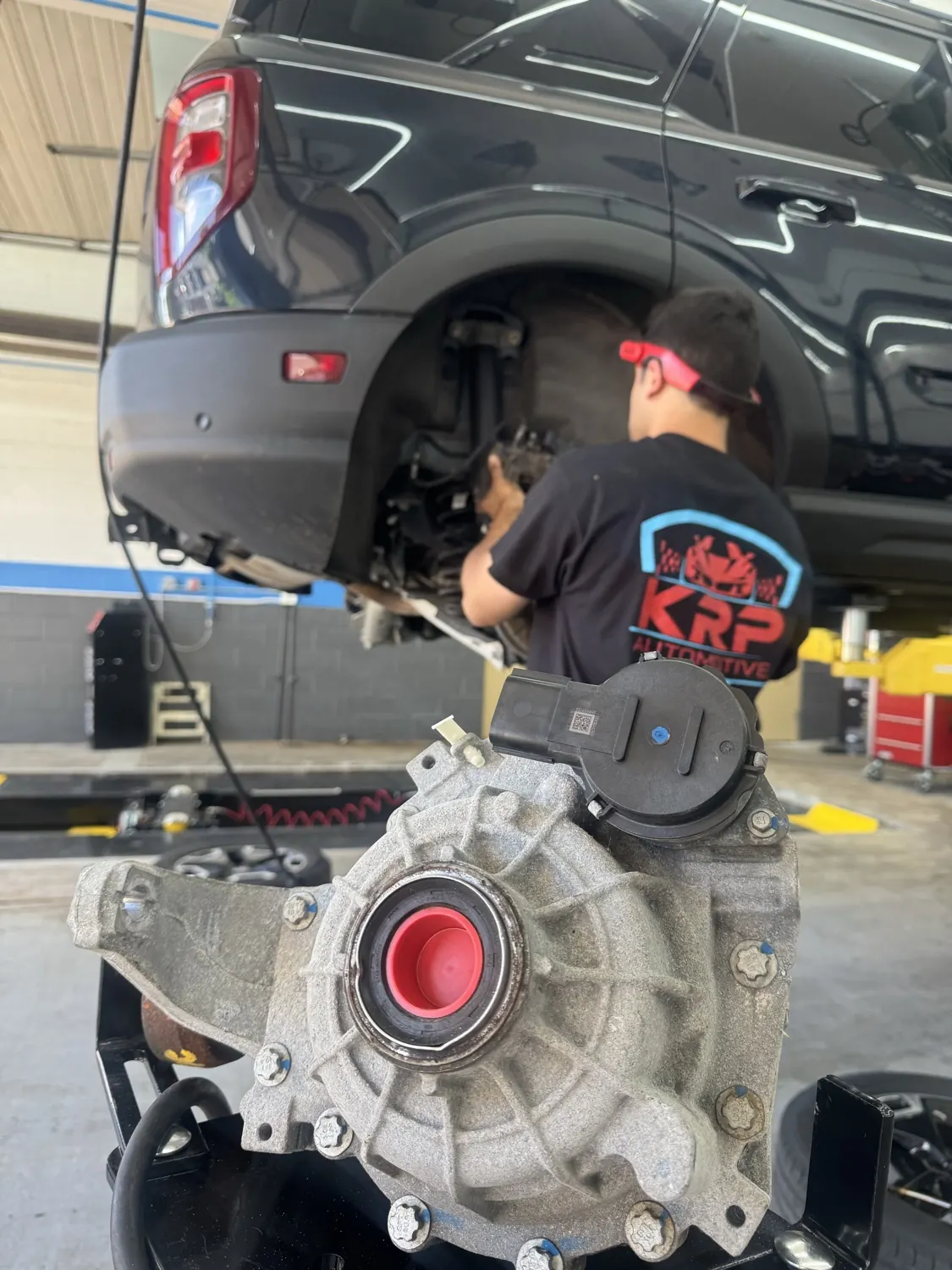
Gear oil and when it is due
Gear oil shears down and picks up metal over time. The drain plug magnet tells us a great deal about what is happening inside.
Heat is what breaks gear oil down, and towing generates it. This is the single most skipped service on trucks.
Same reasoning, and even more often forgotten because most drivers do not know it holds fluid at all.
A limited-slip unit needs the friction modifier, or it chatters in tight turns. The wrong fluid causes exactly the noise people bring it in for.
Water in a differential looks like coffee with milk and destroys bearings quickly. This is not a wait-and-see situation.
A differential running low wears fast and silently. Fixing the seal is cheap next to what follows.
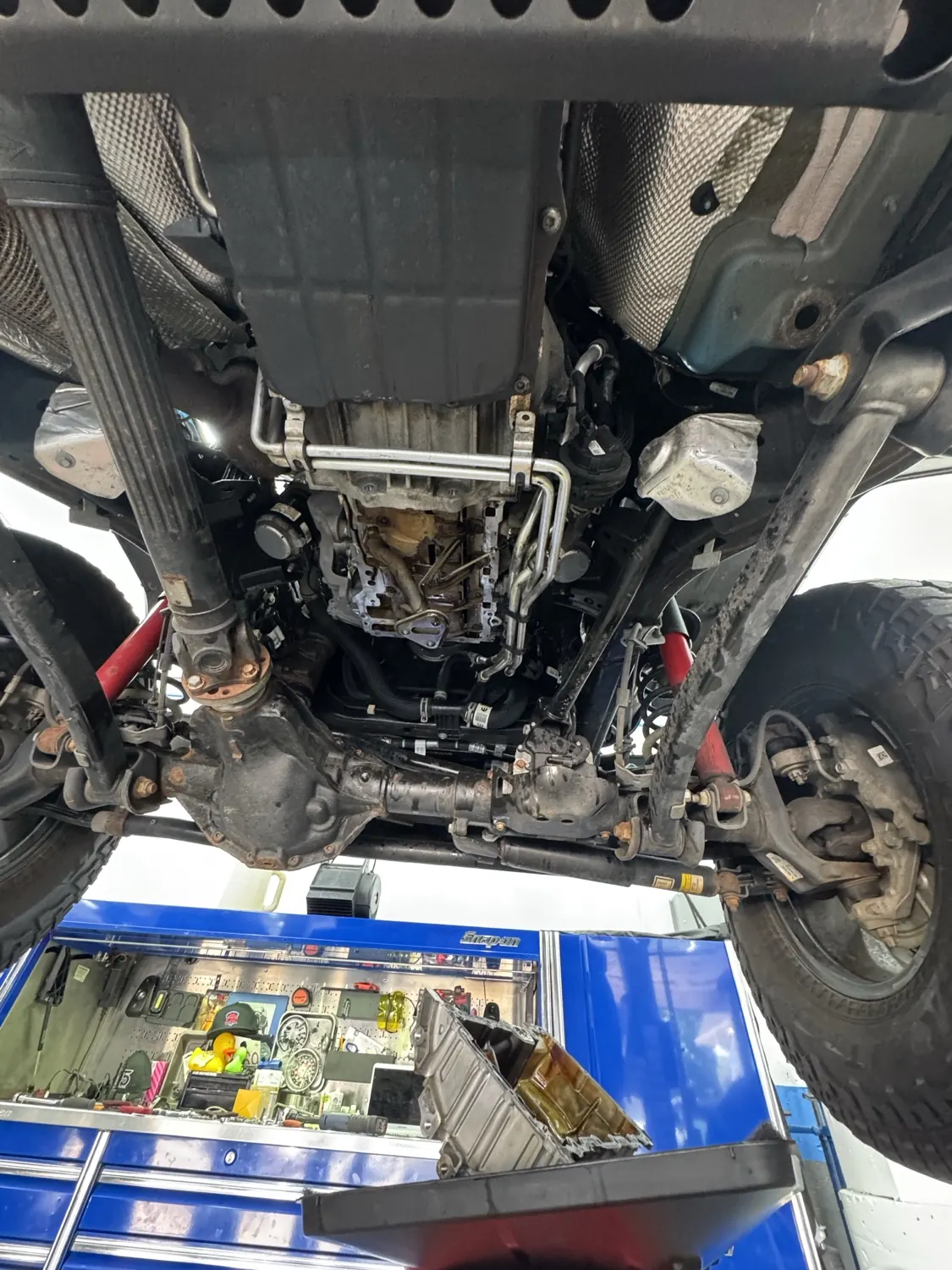
Service, repair or rebuild
The one most vehicles need
Where the leak or the growl is
When the gears have gone
The questions people ask
On a turn, the outside wheel travels further than the inside one. The differential lets them turn at different speeds while both keep driving. Without it the tires would scrub and something in the driveline would eventually give.
A howl or whine that rises with road speed is the classic sign, often with a clunk when taking up drive. Gear oil on the inside of a wheel is the other one, and that is the cheap stage to catch it at.
Commonly every 30,000 to 60,000 miles, and sooner if you tow. The drain plug magnet tells us more than the mileage does, which is why we look at it rather than quoting a chart.
Usually not. Clicking on tight turns is a CV joint, which is a different and generally cheaper repair. The noise and when it happens separate the two quickly.
Yes, simply because there is more of it. Front differential, rear differential and a transfer case, each with its own fluid and its own schedule, and all three get skipped routinely.
Often an actuator, a vacuum or electrical fault, or the transfer case itself. It is a diagnosis rather than a guess, because those three are very different repairs.
Both are possible and we price both. Seals and bearings are regularly repaired. Once the gears themselves are worn, we give you the rebuild and replacement figures side by side against what the vehicle is worth.
Four-wheel and all-wheel drive
A front-wheel drive car has one differential, built into the transaxle, and a pair of CV axles. A four-wheel drive truck has a front differential, a rear differential and a transfer case, each holding its own fluid on its own schedule.
All-wheel drive adds a center differential or a coupling, and the vehicle depends on all four tires having closely matched rolling diameters. That is why we are firm about replacing tires in fours on all-wheel drive: a mismatched set makes the system work continuously against itself.
None of this is exotic, but it is three or four fluids instead of one, and in our experience most of them have never been changed. If you tow, plow or drive a four-wheel drive truck through Sussex County winters, that is the service worth asking us about at your next visit.
What drivers say
I needed a simple brake service, but I did not expect these guys work in the 21st century environment. They communicated with me via detailed text messages, and kept me involved in all decision-making.
Came here for brake pads and rotors. Got a good price, and they did a good job. They did a road test also.
Great service, they got me in same day for full brakes front and back. Definitely recommend.
Differential repair near me
Differential repair near me, differential fluid change, CV axle replacement and transfer case service all describe work we do at all four open shops, on cars, trucks and four-wheel drive vehicles.
A vibration at speed is often tire balance rather than the driveline, a shudder can be the transmission, and a growl that changes with steering sits with wheel bearings.
Answers to some of the questions KRP Automotive customers ask most. Still not sure? Give us a call, we’re happy to help.
A howl or whine that rises with road speed, often with a clunk when you take up drive. It tracks road speed rather than engine speed, and that distinction separates it from a transmission or engine noise in one road test.
Commonly every 30,000 to 60,000 miles, and sooner if you tow. What the magnet on the drain plug is holding tells us more than the mileage does.
Usually not. Clicking on tight turns is a CV joint, which is a different and generally cheaper repair, and it normally follows a torn boot that let the grease out.
Yes, because there is more of it. A front differential, a rear differential and a transfer case, each with its own fluid and schedule. In our experience most have never been changed.
Commonly an actuator, a vacuum or electrical fault, or the transfer case itself. Those are three very different repairs, so it is diagnosed rather than guessed.
Often, yes. Seals and bearings are routine repairs. Once the gears themselves are worn we price a rebuild and a replacement side by side against what the vehicle is worth.
Tire balance first, then a worn universal joint or the driveshaft center support bearing. We rule out balance before looking at the shaft, because it is quick and much cheaper.
Differential work is not something every mechanic takes on. Our mechanics and drivetrain specialists set backlash and preload to specification and then road test under load, because a differential that is quiet on a lift can still howl on the highway. Differential rebuilds belong here too: where a gearset is past shimming we rebuild or replace the unit and set it up to specification rather than guessing at it.
Most repairs at KRP Automotive are guaranteed for as long as you own your vehicle. If you pay for a repair at our shop, you shouldn’t have to pay for it again, that’s our promise at all four open New Jersey locations.