A squeal that comes and goes
Most pads carry a small metal tab that starts singing when the friction material gets low. It is designed to do that. Caught at the squeal it is usually a pad set; ignored until it grinds it becomes pads and rotors.
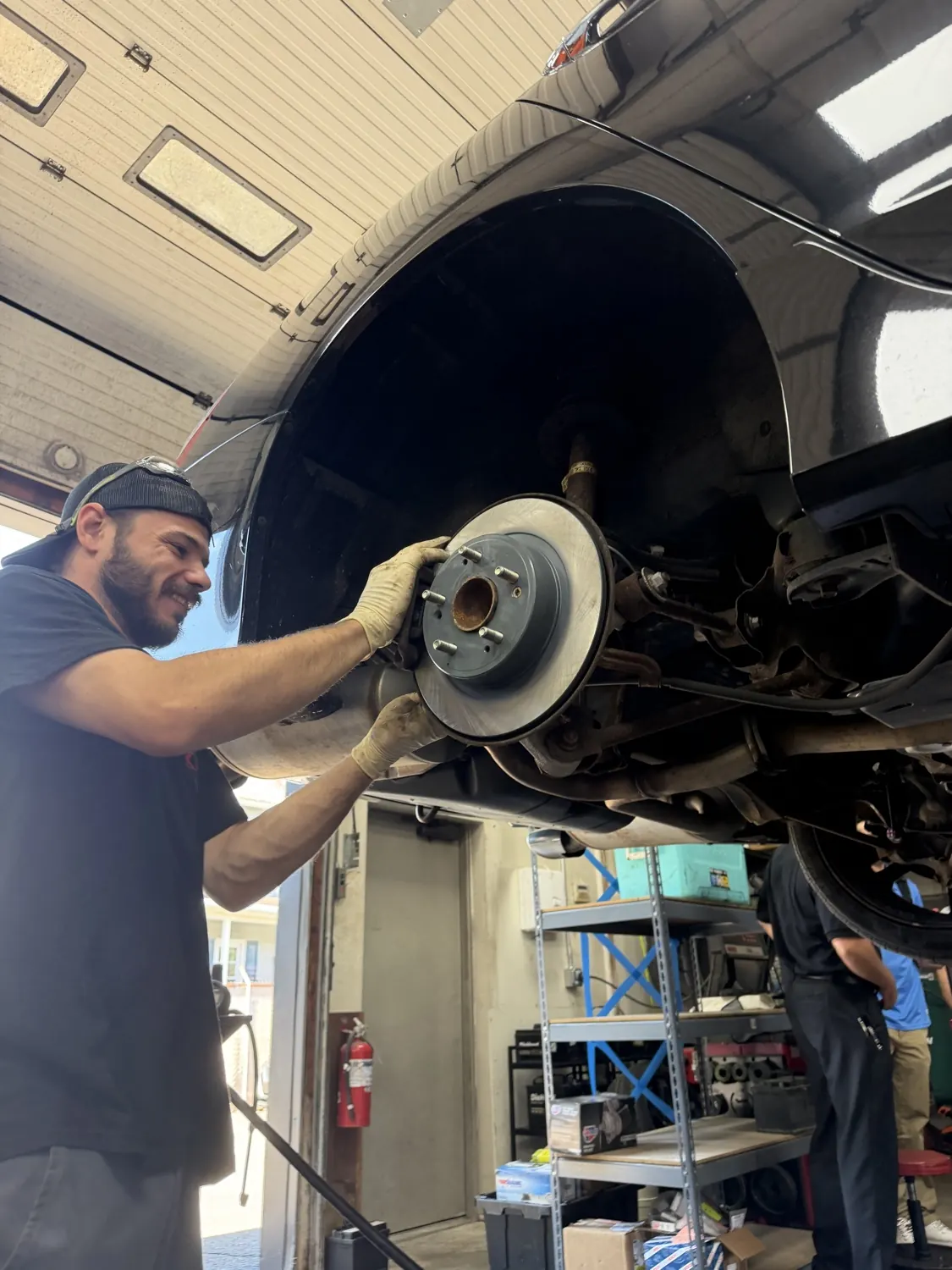
Professional, dependable service with a lifetime warranty on most repairs, at four open New Jersey shops, with Lodi opening soon. Book your appointment with KRP Automotive today.
Free inspection first
Brakes are the one system on a car where a guess is not good enough, so we do not guess. Every brake repair here starts with the wheels off and four measurements: how much friction material is left on each pad in millimeters, rotor thickness against the minimum stamped on the part, rotor runout at the hub, and the condition of the fluid. You see those numbers before you hear a price.
That order decides the job. We measure and inspect your rotors and tell you whether they need to be replaced. Pads caught at the wear indicator stay a pad set. A car that pulls under braking is usually one seized caliper rather than a full set of everything. Measuring first is how you tell those apart.
Brakes are a wear item, so brake work carries our standard 24 month, 24,000 mile warranty on parts and labor rather than the lifetime cover we put on most other repairs. The work is the same at Clifton, Franklin, Hawthorne and Newton.
When to come in
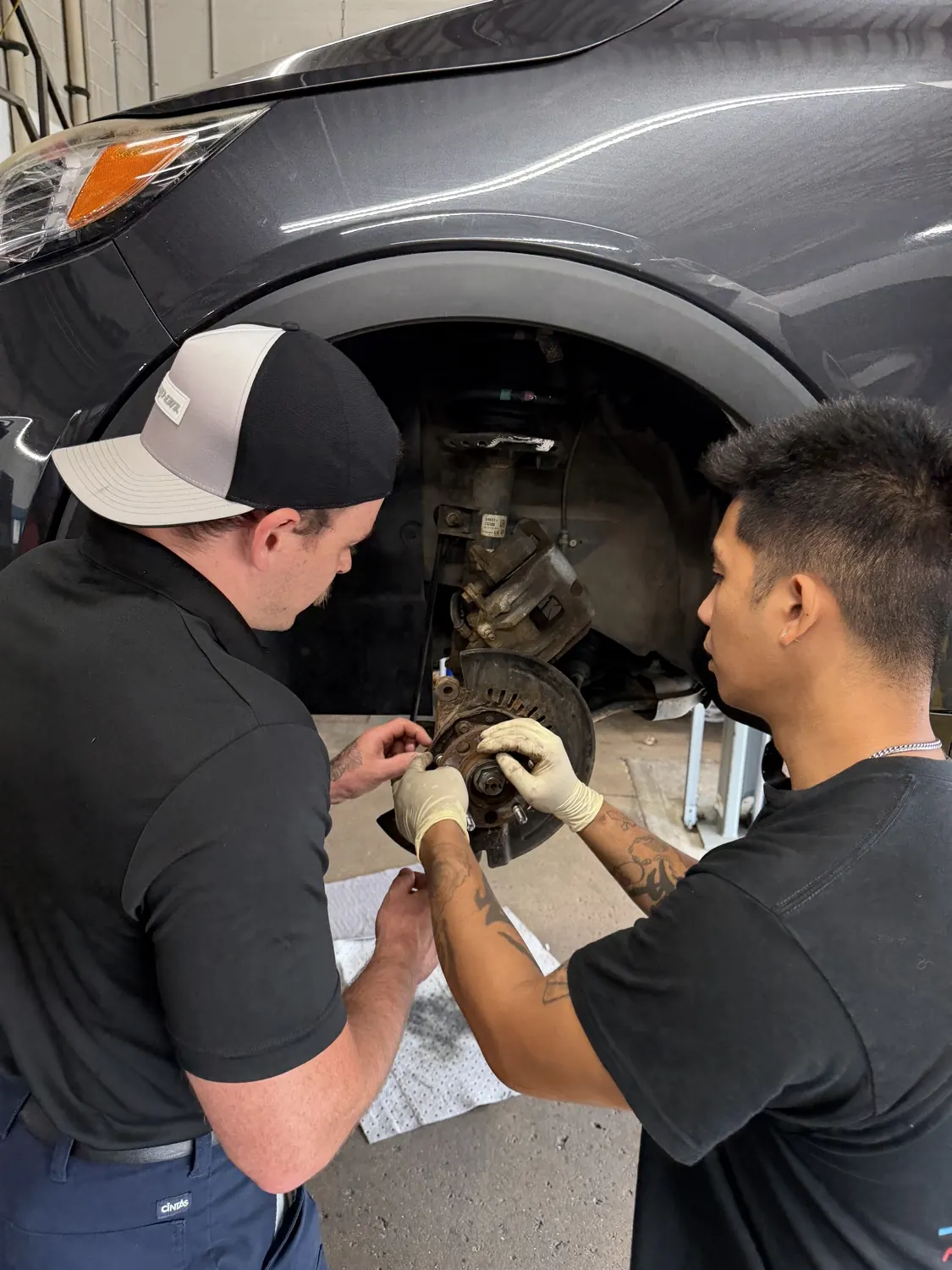
Brakes almost never quit without warning. They tell you first, usually for weeks. Here is what each signal actually means underneath.
Most pads carry a small metal tab that starts singing when the friction material gets low. It is designed to do that. Caught at the squeal it is usually a pad set; ignored until it grinds it becomes pads and rotors.
That is steel backing plate against rotor face. The friction material is gone. At this point the rotor is almost always scrap, and a caliper can be damaged too if it went on for long.
Rarely the pads. Usually brake fluid that has absorbed water and boiled, or a flexible hose that balloons under pressure instead of transmitting it. New pads will not fix a pedal that sinks.
One corner is doing more work than the other, normally a sticking caliper slide pin or a collapsed hose holding a pad against the rotor. An alignment will not cure a dragging corner.
Thickness variation across the rotor face from repeated heat cycles, which is the everyday result of stop-and-go traffic. It is not a tire balance problem. We measure runout at the hub before selling rotors.
A caliper that is not releasing. The pad is cooking against the rotor and the heat has nowhere to go. If a wheel is too hot to touch, stop driving and call us rather than driving it in.
If the car takes noticeably further to stop than it used to, that change happened gradually and is easy to normalize. Worn friction material, contaminated fluid and tired hydraulics all do this.
A parking brake that will not hold on a hill, will not engage, or stays stuck on is almost always a seized cable, a corroded screw mechanism, or a worn shoe inside the rear rotor.
What we do
We replace worn pads with components that meet or exceed the manufacturer's spec, so stopping power comes back without a comeback visit.
We measure thickness and runout first, then tell you whether the rotors need replacing.
A sticking or seized caliper wears one corner faster than the rest and can drag the car under braking. We free it or replace it.
Old fluid holds water, which lowers its boiling point and softens the pedal. We exchange it rather than top it up.
Wheels off, four measurements, and the numbers shown to you before anyone quotes a price.
Shims, slide pins, flexible hoses and steel brake lines are the quiet half of a brake job, and the usual reason a new set of pads does not feel new. Corroded brake lines are a New Jersey winter problem we see every spring.
Reading the measurement
Brake pads are one of the few things on a car that can be measured rather than judged. Every pad we look at gets a number in millimeters, and this is what those numbers mean, so a report from us is something you can read yourself.
Roughly where a pad starts life. Some performance pads start thicker and some small cars thinner, so the number that matters is how far it has come down, not the figure on its own.
Nothing to do. If you are seeing this on a report with a recommendation attached, ask what the recommendation is for.
This is where we tell you it is coming rather than that it is due. On most cars that is another few thousand miles, and it means you choose when.
Below this the friction material is thin enough that it heats faster, fades sooner and stops shedding heat into the pad backing the way it was designed to.
The wear indicator is either squealing or about to. What follows is the backing plate against the rotor, and a pad set becomes a pad and rotor set.
Grooves cut into the rotor face, and usually the caliper has been running at the end of its piston travel long enough to be worth checking too.
Pads and rotors are not the same wear item
Every rotor carries a minimum thickness cast or stamped into the hat. Once it wears below that figure it is scrap rather than a judgment call, which is why the measurement decides the job and not an opinion.
What people call a warped rotor is almost always thickness variation from heat, not a bent disc. It is measured with a dial indicator at the hub, and that measurement decides whether it needs replacing.
Brakes are replaced across an axle rather than one wheel, because two corners with different friction levels pull the car under braking. That is why a quote covers both sides even when only one is noisy.
Choosing the pad
The right compound depends on the vehicle and how it is driven, not on which is cheapest on the shelf. This is how the three differ in practice.
Quiet, clean, most daily cars
Harder working, better heat
Soft, cheap, short life
What a brake job actually costs
Brake repair cost is not one figure, and a shop that gives you one before looking is guessing. These are the things that move it, and all of them are visible on the inspection.
Front brakes do most of the stopping, so fronts wear faster and are quoted more often. Rear brakes on many modern cars also carry the electronic parking brake, which adds a step.
We measure the rotors against the minimum stamped on the hat and tell you whether they need replacing. Below that figure they are scrap and the job changes.
A seized caliper, a collapsed flexible hose or worn slide pins turn a pad job into a bigger one. We find those on the inspection, not halfway through.
Ceramic, semi-metallic and organic are not the same price, and the right one depends on the vehicle and how it is driven rather than on what is cheapest.
A European car with electronic parking brakes and wear sensors takes longer than a domestic sedan, and the parts cost more.
If the fluid has taken on water it gets exchanged. We test it rather than adding a flush to every ticket.
Dashboard warnings
Usually low fluid or the parking brake still engaged. Low fluid most often means the pads are worn rather than that the system is leaking, because the caliper pistons sit further out as the pads thin. Worth checking the same week.
The anti-lock system has logged a fault and has switched itself off. Normal braking still works, but you lose anti-lock in an emergency stop. Most often a wheel speed sensor or its wiring. We read the codes rather than guess.
Treat this as urgent. Together they can point at a hydraulic problem or a fault that affects brake force distribution, and that is not a drive-it-for-a-week situation.
How often brakes need attention
We look at the brakes on every service, which is why most of our brake work is caught at the measuring stage rather than the grinding stage.
The honest answer to how long brake pads last is that the spread is this wide. A car that commutes Route 46 in traffic and one that mostly runs Route 23 at speed will not wear the same set in the same time.
Fluid is replaced on time rather than on looks, because it absorbs water out of the air whether the car is driven or not. We test it instead of adding a flush to every ticket.
Rotors are not an automatic replacement. They get measured against the minimum thickness cast into the hat, and they get replaced when they fall below it or when runout is out of spec.
How a brake visit runs
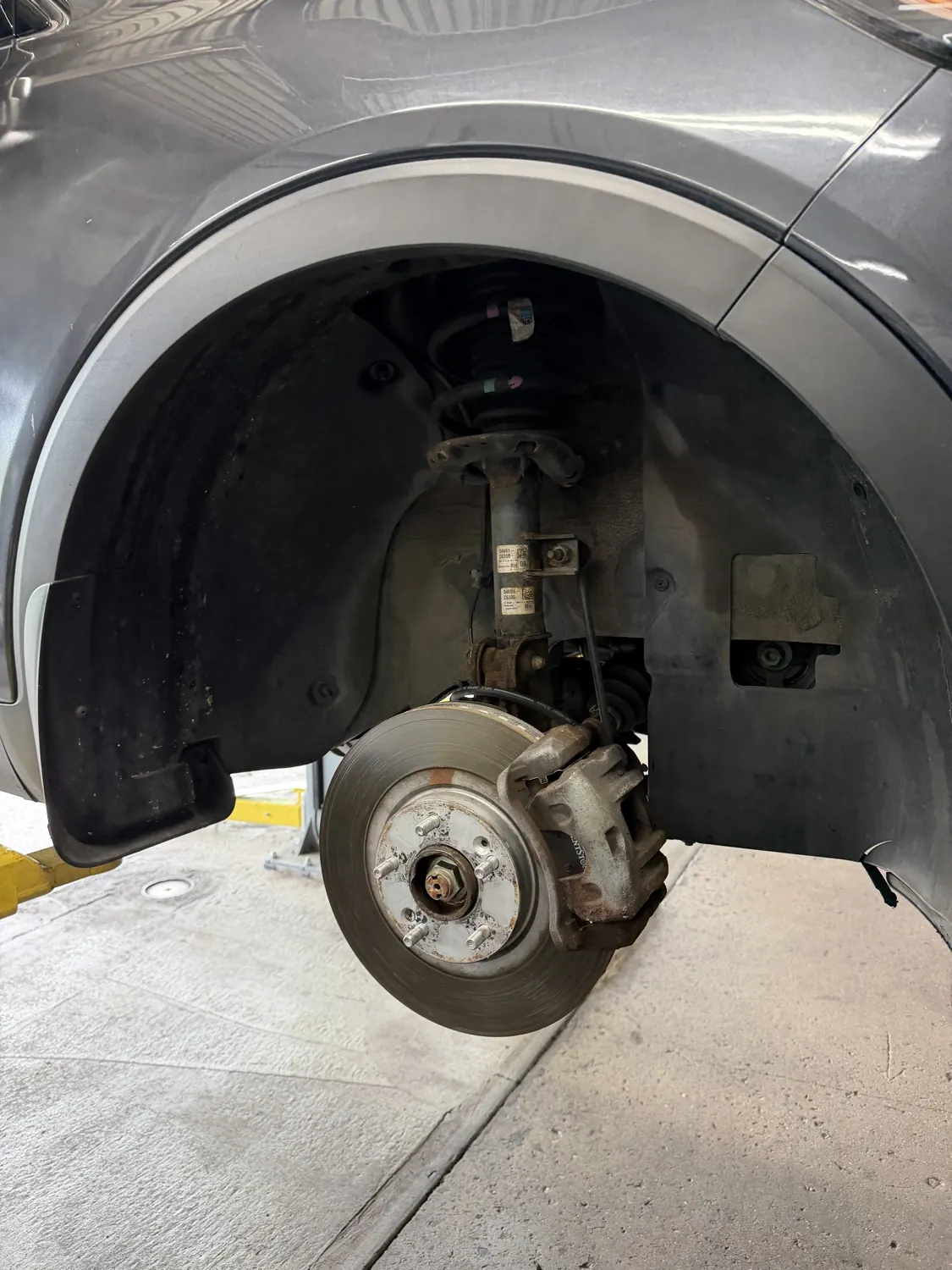
Wheels come off and the whole corner is checked: pads, rotors, calipers, hardware, hoses and fluid condition.
You get the measurements and what they mean, in plain language, along with what can wait and what cannot.
The work is done with quality components, the system is bled properly, and the car is road-tested before you get it back.
What drivers say about the brake work
I needed a simple brake service, but I did not expect these guys work in the 21st century environment. They communicated with me via detailed text messages, and kept me involved in all decision-making.
Came here for brake pads and rotors. Got a good price, and they did a good job. They did a road test also.
Great service, they got me in same day for full brakes front and back. Definitely recommend.
Brake repair near me
If you searched for a brake shop near me, brake replacement near you, or brake pads and rotors replacement, those all describe the same visit here. We are in Clifton, Franklin, Hawthorne and Newton, and whichever one is nearest, the inspection, the measurements and the 24 month, 24,000 mile warranty on brake work are the same.
Brake symptoms overlap with other systems. A shake in the steering wheel only when you brake is rotors, but a shake at highway speed with your foot off the pedal is usually tire balance, and a pull that is there whether you are braking or not is alignment or a worn suspension part. We sort out which one it is on the lift before quoting anything.
Answers to some of the questions KRP Automotive customers ask most. Still not sure? Give us a call, we’re happy to help.
It depends on which axle, whether the rotors need replacing, what else the corner needs and which pad compound suits the car, so a number given before anyone looks is a guess. We measure first and give you the figure before any work starts.
Anywhere from about 25,000 to 70,000 miles. The spread really is that wide: a car in stop-and-go traffic on Route 46 and one that mostly runs Route 23 at speed will not wear the same set in the same time. We measure what is left in millimeters rather than guessing from mileage.
Not automatically. Every rotor has a minimum thickness cast into the hat. We measure thickness and runout and tell you whether the rotors need to be replaced. Below that figure a rotor is scrap and the job changes.
Most brake jobs are finished the same day. The inspection comes first, and we call you with the measurements before anything is started.
A squeal is usually the wear indicator telling you the pads are low, and it is worth booking that week. Grinding, a pedal that sinks, a burning smell or a wheel too hot to touch are different: stop driving and call us.
Brakes are replaced across an axle rather than one wheel. Two corners with different friction levels pull the car under braking, which is a safety problem rather than a preference.
Yes, under our standard warranty rather than the lifetime one. Brakes are a wear item, so brake work carries at least 24 months and 24,000 miles on new or remanufactured parts and labor. The lifetime cover applies to most other repairs.
Any mechanic can fit pads. We measure rotor thickness and runout and check the hydraulics first, so you are not back in six months for the same noise.
Most repairs at KRP Automotive are guaranteed for as long as you own your vehicle. If you pay for a repair at our shop, you shouldn’t have to pay for it again, that’s our promise at all four open New Jersey locations.
Brakes are a wear item, so brake work carries our standard warranty of at least 24 months and 24,000 miles on parts and labor rather than the lifetime cover. Read the full terms.