Engine and drivability
Misfires, rough idle, hesitation, stalling, poor economy and loss of power.
Professional, dependable service with a lifetime warranty on most repairs, at four open New Jersey shops, with Lodi opening soon. Book your appointment with KRP Automotive today.
A diagnosis is work, not a free code read
Anyone can read a code. A parts store will do it in the lot for nothing, and the number it gives you is real. What it is not is a diagnosis. A code names the circuit that reported a problem, and the part in that circuit is only one of several things that could have caused it.
That gap is where money gets wasted. A code for an oxygen sensor can be a sensor, a wiring fault, an exhaust leak ahead of it, or an engine running rich for a completely separate reason. Replacing the sensor fixes one of those four.
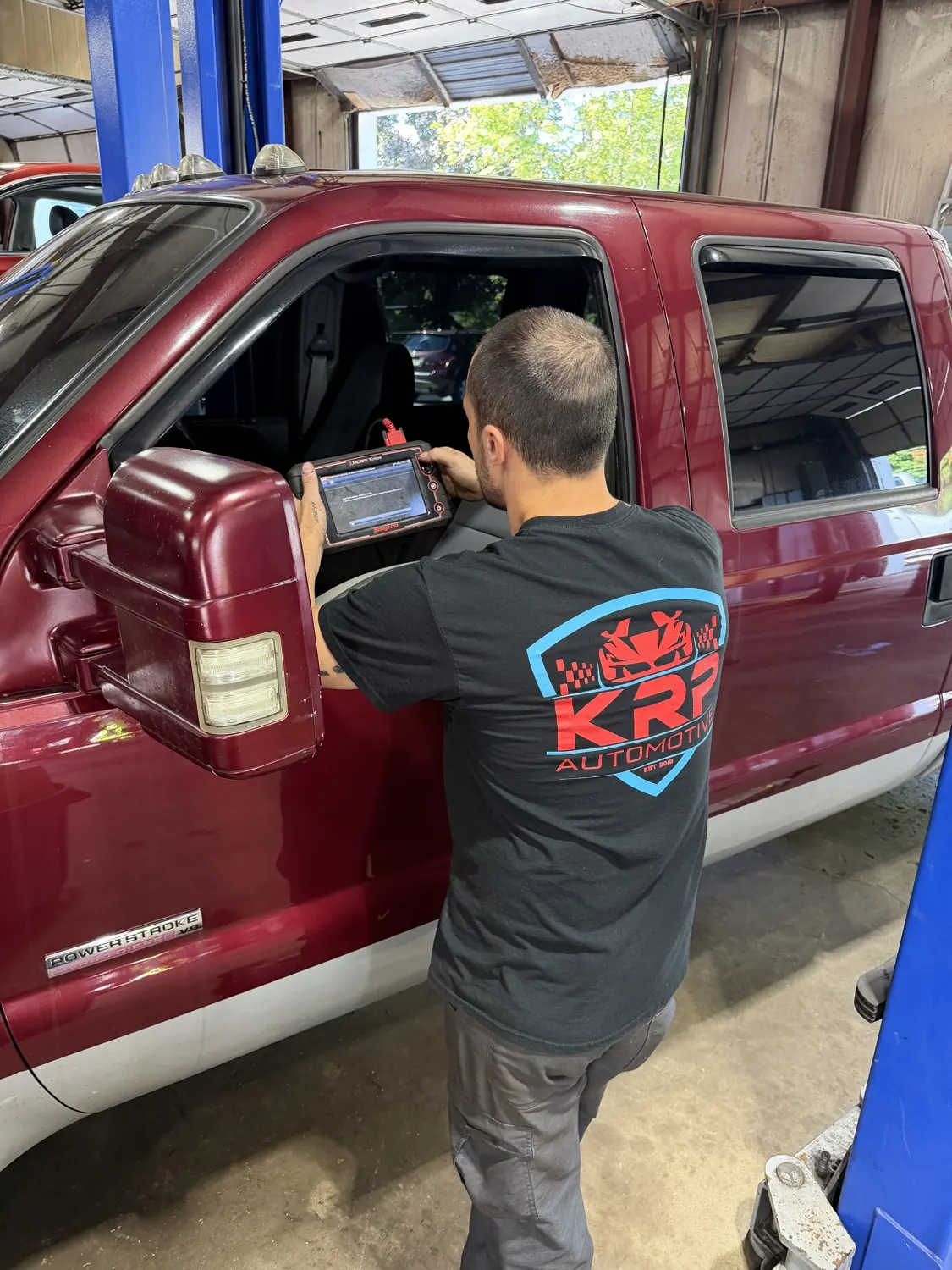
So we test the circuit rather than the part. Scan data, freeze frame, waveforms, and pressure readings on the actual component, then a written explanation of what failed and why before a single thing is ordered.
That applies to faults with no code at all. A noise, a vibration, a smell or a car that only misbehaves cold is still a diagnosis, and it is still road tested and inspected properly.
How a diagnosis actually runs
When it happens, how often, whether the car is cold or warm, what changed recently. Intermittent faults are solved by the description more often than by the scan tool, and a technician who skips this step is already guessing.
Not just the engine. Transmission, ABS, body and network modules all store faults, and a code in one of them often explains a symptom that looks like it belongs somewhere else.
A stored code records the conditions at the moment it set: speed, load, temperature, fuel trims. That snapshot is what separates a diagnosis from a parts swap.
Scope traces, voltage drop testing and pressure readings on the actual component. A code names a circuit, not a faulty part, and the difference between those two is what people pay for twice elsewhere.
The fault is cleared, the car is driven under the conditions that set it, and the data is read again. A diagnosis is not finished until the symptom fails to come back.
What we diagnose
Misfires, rough idle, hesitation, stalling, poor economy and loss of power.
Evaporative system leaks, catalyst efficiency, oxygen sensor and fuel trim problems that keep the light on.
Shift quality complaints, limp mode and stored codes read with live data on a road test.
Wheel speed sensors, modules and the wiring between them, where a dash light is the only symptom.
Parasitic draws, communication errors between modules, and the intermittent faults that are hardest to pin down.
Road tested and inspected, because plenty of complaints never set a code at all.
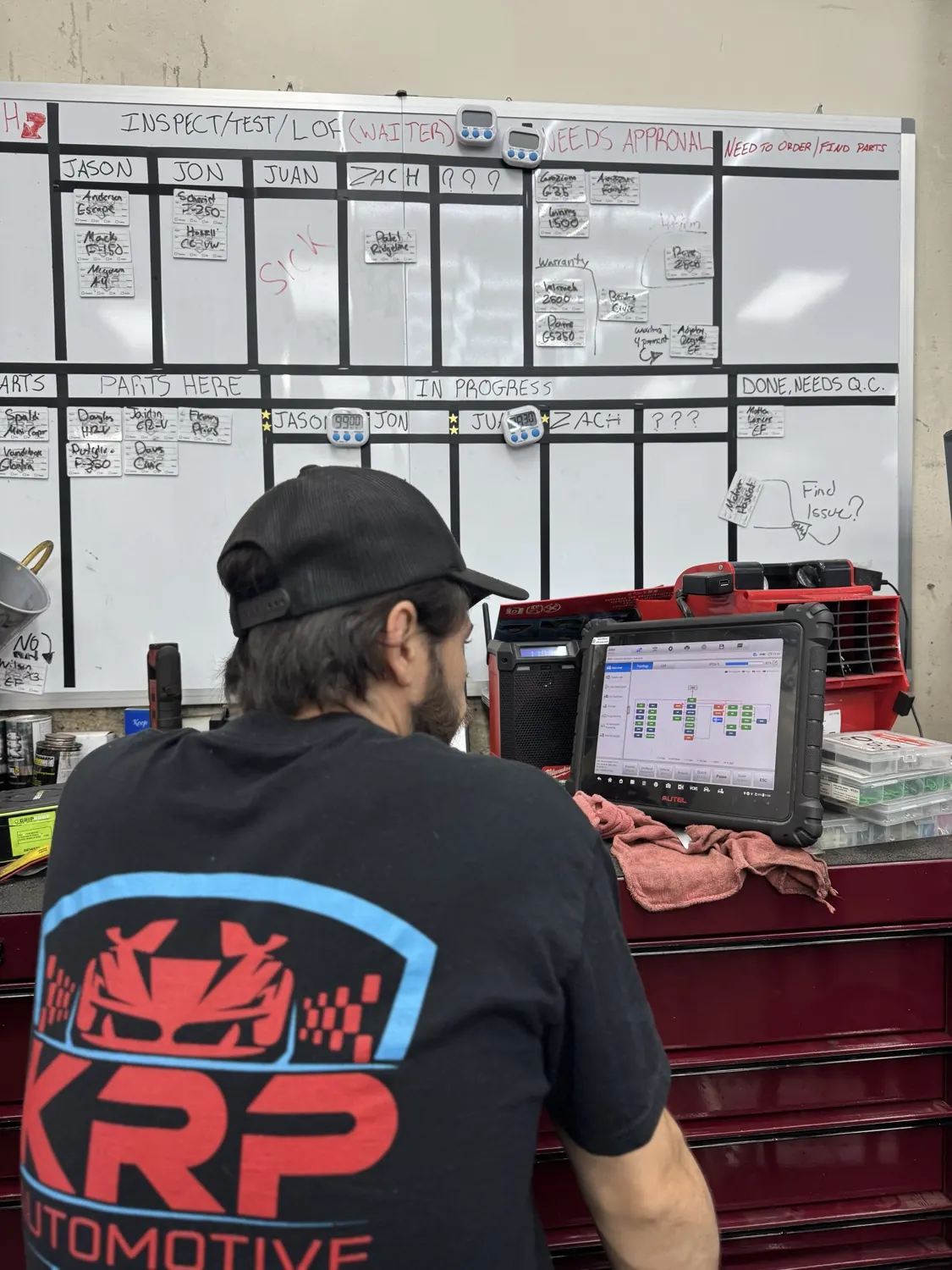
The equipment behind it
What is included
What moves the time, and the price
A problem happening right now is measured directly. One that appears once a week has to be recreated first, and that is the difference between an hour and a day.
A single stored code in one module is quick. A symptom with codes across the engine, transmission and ABS takes longer because the order they set in matters.
Some circuits are reached in minutes and some are behind a dashboard. The test is the same; getting to the connector is not.
Later European and hybrid vehicles carry more modules and more network traffic, so there is simply more to read and more to rule out.
Parts already installed by someone else rule things out, which helps. Wiring already cut into does the opposite.
This one is free and it genuinely shortens the job. When it happens, how often, hot or cold, and what else is switched on at the time.
Why guessing is the expensive option
Here is the arithmetic that rarely gets explained. A diagnostic charge buys an hour or so of a technician proving which part of a circuit failed. Skipping it means buying the part the code names and fitting it to see what happens.
On a code that names an oxygen sensor, the sensor is one of four plausible causes. Fit it without testing and there is a reasonable chance the light returns, at which point you have paid for a part, paid for the labor to fit it, and still do not know what is wrong.
Two or three rounds of that cost more than the diagnosis would have, and they take longer. That is the whole case for testing first, and it is why we put the explanation in writing before we quote.
What drivers say
I needed a simple brake service, but I did not expect these guys work in the 21st century environment. They communicated with me via detailed text messages, and kept me involved in all decision-making.
Came here for brake pads and rotors. Got a good price, and they did a good job. They did a road test also.
Great service, they got me in same day for full brakes front and back. Definitely recommend.
Car diagnostics near me
Car diagnostics near me, auto diagnostic test and engine diagnostics all describe this visit. We run them at Clifton, Franklin, Hawthorne and Newton.
If your dash light is specifically the check engine light, there is a page for that: what the light means and the codes behind it. Diagnosis of a wiring or charging fault sits with electrical repair.
Answers to some of the questions KRP Automotive customers ask most. Still not sure? Give us a call, we’re happy to help.
There is a charge, because a diagnosis is work rather than a code read. What you get for it is a tested answer: which part of the circuit failed, why, and a quote before anything is ordered. It is the cheapest part of any repair that would otherwise be guessed at.
No, and the difference costs people money. A free read gives you the number the computer stored. It does not tell you whether the sensor, the wiring, a leak or an unrelated fault set it. Bring us the number by all means; it saves a step.
A straightforward fault is often an hour. An intermittent one takes longer, because the conditions that cause it have to be recreated before anything can be measured. We tell you up front which kind we think yours is.
Yes, and a good share of what we diagnose never sets a code. Those are road tested and inspected rather than scanned, and the description you give us does a lot of the work.
Yes. Transmission, ABS, body and network modules all store faults, and a code in one of them regularly explains a symptom that looks like it belongs elsewhere.
Often, if the part is available. Either way you get the diagnosis and the quote first, and the decision stays yours.
Yes. Our scan tools reach every module rather than only the generic engine codes, which is what European diagnosis usually requires.
A diagnostic here is not a mechanic reading a code off a scanner and guessing. The code says which circuit is unhappy; the test says why, and you get the second answer before any repair is quoted.
Most repairs at KRP Automotive are guaranteed for as long as you own your vehicle. If you pay for a repair at our shop, you shouldn’t have to pay for it again, that’s our promise at all four open New Jersey locations.